Showing posts with label fabric. Show all posts

Saturday, 26 September 2015

October 3 Sale Specials

1 Sale Down, 3 to Go

Our last sale was one of the best we've had to date - pre-loved and factory left-over fabrics and notions flooded out of our little store! When all the customers had left we took a look around and noticed barely a dent was made on what we still have!

HELP! We have got to clear out as much stock as possible before we leave our location at the end of October!

Special for the next sale:

Patterns - FREE!
Zippers - FREE!
Vacuum Bags of 3m lengths of fabric - FREE!
Notions - $2 or less!
Rolls of fabric in the green bins: $2 each, any size
Fabric on bolts - $5 ea

See you there! 
Saturday, October 3
10-1
Vacuum Bags of 3m lengths - now FREE

Most notions $2/bag

Boxes and boxes of free stuff outside

Green bins of rolled fabric - $2 any roll

Friday, 13 February 2015

Garment 11: Opportunity

http://www.zoetrope.me/afterword/iammia-seamlessness-pilgrimage
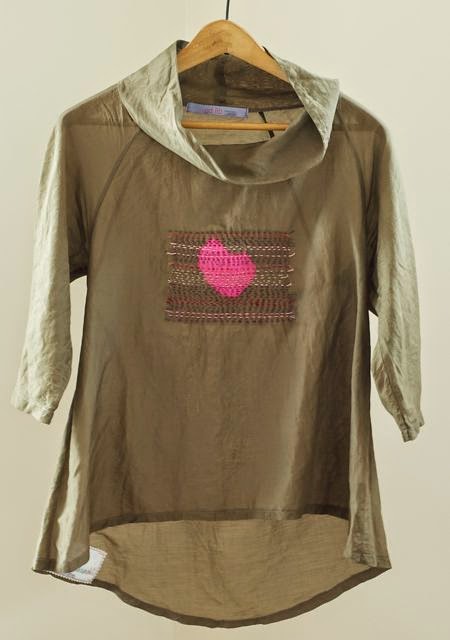
First off, I will disclose that I had no part in the design or making of this lovely, so-light-it-could-almost-float-away raglan-sleeved top. That credit is all due to a talented friend, Zoe Welch: "slow fashion" creator, writer, photographer, movie-maker - amongst other gifts - and first-rate source of encouragement, whom I met through OSF.

It doesn't belong to me, either, though it's adorable and I think I could totally rock it. It is owned by another friend and fellow OSF board member, Kat Siddle, who bought it from Zoe one night when we were picking up a donation of fabric from her home.

So why are you looking at pictures of it, you're wondering? Enter Kat's teal winter coat. It's a really cute coat, with a really badly-behaved zipper. One evening Kat's beautiful Zoe top became so completely stuck in the zipper of her coat, that after a 2-hour struggle, she had to have her fiance finally cut her out of it. Aw man. Was it ruined forever? Hmm. That might require a little side-ways thinking. That's where I came in.

I love a good side-ways think, especially when it involves giving purpose to useless, potentially ruined stuff. The hole itself was nicely placed, and nicely shaped - kind of heart-like, I thought. I happened to have, sitting on my sewing table, the left-overs from a recently finished piece - scraps from a twice-abandoned cashmere sweater, pink and deliciously soft, which I had originally lifted from Zoe's Sally Ann donations bag. What's not to love about cashmere? Or pink. It seemed a fitting material for a heart-shaped patch.

The running stitches were done with yarns from those hopeful little packets that hang on better-quality new clothes and may contain one or more of the following: a spare button that will almost certainly never know a buttonhole, a neatly-coiled length of yarn with even less hope of ever darning a hole, a symbolic sprinkling of loose beads or sequins. In rare cases - and a sure sign of the purchaser's elevated taste level - one might find two metal or plastic collar stays: remedy for the even less likely event of that uncommon, though annoying, affliction: Unequal Collar Point Orientation.

I've been saving the packets since I can remember, and most "estate" donations at OSF contain an assortment of them. I expect most of us hang on to them out of obligation, at least until their original garment has passed from our lives, when we are finally released from the responsibility of keeping them around. But by then, they've found a semi-permanent - though never entirely satisfactory - home in the junk drawer, or, more likely, the button box, mixed in with a thimble or two, a couple of dome fasteners, a corroded penny, and a few random nuts or screws, quietly living out their tasteful, but pointless existence. It was very, very satisfying to put some of them to use.

I usually bring along with me a bag of hand sewing (or un-sewing, more often than not!) whenever I have to ride the bus, wait for the doctor, sit through the kids' extra-curricular activities, or spend more than 20 minutes in a passenger seat. Two neuroplasticity sessions later, and voila! Survey says, definitely not ruined!

Considering the higher quality of garments that generally merit spare parts hang tags, I suspect the yarns used for the stitching are likely mostly real wool. I'm hoping the patch might felt up a little with washing, in a jaunty smocking-esque sort of way. We shall see.


Thursday, 22 January 2015

Garment 6: Time Traveller, 1965


This cheerful sweater started off as a donation to OSF of a long-ago abandoned sewing project - a barely-begun, pre-Lycra stretchy cardigan. My first reaction upon pulling it out of the green garbage/donation bag was to put it directly in the Free Box: youthfully yellow, yet oddly frumpy; droopy rib-knit fabric; darts in a knit??! Rust stains from a pin stuck in it over the course of decades. A little musty, in a bag that had gone the way old plastic bags can go. There didn't seem any hope.

But something about its hopelessness encouraged me to live with it a bit first, to see if it would suggest a way to make it useful and wanted. Within a day or two it started a conversation with a bright, rich pink, deliciously soft, damaged, cashmere cardigan I had plucked from a friend's bag of cast-offs destined for the Sally Ann. They've been together ever since.

The donation came from an elderly lady who can no longer sew, and whose son is systematically taking control of her fabric hoarding. When she is lucid she tells him which fabric can go; when she's not she accuses him of stealing. He shows up at OSF sales bearing bags or boxes of his mother's stash, and a sad, but satisfied smile. It's the usual personal donation: two or three yards each of many types of fabric, just enough for one outfit, plus a few bags of scraps. The last box usually contains the notions, patterns, maybe tools: pinking sheers, or a chalk-filled hem marker, half-empty bobbins with five different colours of thread on each, a tin heavy with buttons, dome fasteners and useful bits removed from garments long gone. I often develop a fondness toward the original owner of the personal donations. We would recognize each other if only we had met.

I've been enjoying sorting this donation more than most. As ever, each fabric has something to say about the person who saved it, but this time it's a person living and sewing in the '60s, the decade that never ceases to inspire me, and into the 70s, when polyester double-knit really got crazy. Finding the usefulness and beauty in butt-ugly polyester double-knit is a special interest of mine.

Only the scraps, Ma'am
I haven't claimed any of the lengths of fabric for my own. They're all too nice, and too useful. But I did score big-time on a large variety of small, irregularly-shaped scraps, which any but the most stalwart Waste-Not would declare to be totally useless. Rapture! Several types of hideous, slack-suit-weight polyester double-knit, candy or psychedelic-coloured. One or two snippets of bark cloth. Red, white and blue Mary Tyler Moore-esque extra-stretchy double-knit: droopy-when-wet, underarm-abrading textured polyester swimsuit, anyone? Barely a natural fibre to be seen. I left the projects she didn't start, and took the remains of the projects she finished, and some she gave up on. A tasty challenge.

They just wanted to be together
The main pieces of the cardigan were already cut, neatly marked with inconspicuous blue dots at all the important places, and sewn with a straight stitch at the side seams and shoulder - there was even perfectly matched seam tape to stop the shoulder from stretching. This lady could sew! But that's as far as she went; the project was abandoned, everything folded neatly and placed in a clear plastic bag, with one or two pins for good measure. My guess is it was abandoned for lack of a serger. After all, a person who bothers to tape shoulders won't be satisfied trying to sew stretch fabric on a straight stitch machine. But why save it all these 40-some years? Was she optimistically awaiting the day she might own a serger? Did she stubbornly refuse to admit defeat? Did she forget she even had it -- every single time she came across it? Intriguing.

A clue to its age: it has bust darts, suggesting it was cut from a non-stretch pattern, likely bought prior to 1967, when Stretch & Sew patterns first became available. The colour speaks to the era of psychedelia, but the style is modest, more Please Please Me than Sgt. Pepper; I wonder how old she was at the time. I wonder where it was kept all that time, and I wonder if she groaned every time she came across it, like I would. Or maybe it didn't bother her at all...

The side seams and shoulders were re-cut to be less matronly-y, and the edges finished with the ribbing, cuffs and button placket from the pink sweater. The pink is attached to the yellow with simple back stitches picked by hand. It looks like a running stitch on the front, but is actually a little stretchy. I used a spool of pink ribbony floss that has been sitting in my embroidery box since taking a VSB night class in couture beading with Blossom Jenab, about 15 years ago. I've been wanting to use that floss ever since, and working with it has been smooothly satisfying.

I'm happy with the result, and I like to think the lady who so carefully began it would be pleased to know her project is finally finished.


Useful sewing tip

Most people do as little hand sewing as possible, thinking it is not fun, or it's hard. I can't help with the fun part (though I do enjoy it, myself, in moderation), but there is a simple fact that, if understood, makes it so much easier.

All sewing is all about the grain. Thread has grain. When hand-sewing, the direction the thread is sewn should be the same as it came off the spool. Some folks recommend immediately knotting the thread at the cut end, even before threading the needle, just to be sure to get the direction right. Ignoring the grain results in thread that will knot easily, making hand sewing seem much harder than it needs to be. And not fun.

If you want to use a double strand, do not simply put one strand on the needle and knot the two ends of it together. The difference in the grains will make the threads fight with each other, and it will be a tangly bugger to sew with. Instead, cut two strands, lay them together in the same direction, thread them both through the same needle (tricky, but can be done), knot them together at the end, and sew away.

Speaking of hand sewing, I have read many places that the only proper way to do it is to wax the thread beforehand. I asked Blossom about this, since I've never seen her wax her thread, and she replied that thread these days is strong enough without waxing. Followed by that little "tsk" she sometimes does. So there it is. Couture sewing might be considered by some to be synonymous with doing everything the hard way, but not harder than necessary. I suspect those articles are written by folk who don't wax their thread, either, even if they do sew with the grain.

Size S, but not very small. For sale by appointment. Enquiries at enoughstuffblog@gmail.com

Tuesday, 20 January 2015

Garment 4: Exploration #2: Sie Liebt Dich

Sie Leibt Dich, yeah, yeah, yeah
The "Sie Liebt Dich" top is the second of two metallic blue+brown, over-sized, sleeveless tunics born out of a beautiful relationship with the first garment I ever draped for myself.

The background

Blossom's blossoms. Sigh.
The pink linen top with safety-pin daisies that preceded "Sie Liebt Dich" was inspired by one of Blossom's exquisite embroidery samples, and draped as homework for a collar class. Comfortable and easy to wear, I lived in it all last summer. The only thing is, a draped collar is not meant to go into battle, as Blossom would say. The kiss of death is creasing the gently folded neck edge: no washing, no drying, and certainly no ironing. I ignored this fact completely when choosing the linen fabric and utilitarian design for such a delicate feature as a couture-technique collar. Figured I would deal with it later.

Before: perky
But as I said, I wore it a lot, and eventually it needed to be washed! I went to all kinds of lengths to preserve the collar: I washed it by hand, holding the precious collar out of the water. When it got wet anyway I hung it dry, taking pains to separate the collar layers, thereby keeping the fold uncreased - kind of. I steamed it, wearing an oven-mitt-like protective ironing .....mitt. Eventually, I gave in and chucked the thing in with all the other wash. 

After: flacid - in a good way
It was a sad moment, knowing my beautiful collar was most sincerely dead. After a brief period of mourning I took a look to see if there was anything to be salvaged. Well... the whole thing, actually! It looks terrific! It has gone from crisp, precise, hovering, elegant, full of hope and promise to soft, droopy, relaxed, comfortable, enveloping, wrinkled, creased, experienced and full of character. I loved it before, but I love it after, too! It's like trying to decide which version of my daughter I love best: the smiley, snugly baby who smells like butterscotch; the wobbly toddler with the black eye, splashing in the toilet when I'm not looking; the almost-8-year-old who rubs my back when I vomit "because we're connected, you know". I love them all, and I love the transformation.

The garment, itself

I love it so much I made two copies so someone else and someone else might enjoy it, too. Cotton or linen or a blend, the fabric was handed down to me by a friend. It's a bit heavy, and I expect the colours will crack eventually. Hope so, anyway; it will be good consolation for killing that poor draped collar.


Sie Liebt Dich


"Sie Liebt Dich" is one of only two songs The Beatles ever recorded in another language, the other being "Komm, Gib Mir Deine Hand". The German branch of their record label suggested it, convinced their records wouldn't sell in Europe, otherwise. Though they didn't feel it was necessary to their growing popularity, the Beatles all reluctantly agreed, being a little sweet on Germany, having practically grown up there, after all, to misquote John Lennon. The general consensus is that the pronunciation is done well, but they refused to ever translate their songs again. Just as well; they had other, more important, things to do!

Interesting tidbit half-remembered from a memoir by John Lennon's personal assistant during his time in New York: John Lennon did speak some German, but it was phrases like, "How much for the hour?" or some-such. And there exists a wonderful snip of George Harrison being interviewed in German and singing as much as he can remember of a German folk song. https://www.youtube.com/watch?v=Uj5tmhdcUAA

"She Loves You" is important for these reasons:

  • it is considered a landmark in the evolution of song-writing by John and Paul. A seemingly insignificant detail - the story is told in the third person - is the zero point of their radical departure from the typical way of writing songs of the time (e.g. "Hello Little Girl"). One small step for the Beatles, one large step for mankind. You can trace the trajectory directly from "She Loves You" to the perfection that is the 2nd side of Abbey Road, through all the other moments of sublime brilliance, intuition, inspiration and world-changing innovation in between. They channelled the muse, man.
  • it captures the essence of the screaming, fainting and unprecedented bizarre fan behaviour that was Beatlemania, before it had a name, and while it was still a novelty. On the day of the recording session, a swollen gaggle of fans broke through the meagre security in the building, resulting in running and chasing and chaos all through the studio. From this point on, the Beatles increasingly became prisoners of their popularity. But on the day of the recording they had no idea of what craziness was to come. The adrenaline boost caused by the hysteria is evident in the recording: it's pure excitement, itself. 
  • The choice of the word, "yeah", rather than "yes", ignited social upheaval, and shows how plugged in to the zeitgeist of the time the Beatles really were. The phrase will be forever associated with everything to do with the '60s.

On the decoration

The writing on the garment is made of the threads and dregs that come off when a fabric is serged before pre-shrinking (i.e. what normally goes into the garbage) - in this case a c. 1970 green and white polka-dot polyester double-knit, and a pink nylon tricot, of uncertain age, but likely intended for a slip or negligee. These have been stitched over with freehand machine embroidery - a very pleasant way to spend an hour or two.

On the spelling of the decoration

I struggled with the spelling of "yeah" in German. Ja? That didn't sit right. The top waited, unfinished, for weeks, while I dwelled and asked around. Happened to meet the principal of a Vancouver German school, who seems to have a particular interest in how words become appropriated from other languages. I put the question to her, and after thinking out loud for a bit, she emphatically proclaimed the correct spelling to be y-e-a- h. Just as the Beatles refused strong advice to change "yeah" into "yes", they also refused to translate it into "ja" - of course it should be "yeah"! I admire the Beatles for staying true to their instincts way back then. I aspire to be even half as fearless.


Size M. For sale by appointment
Enquiries at enoughstuffblog@gmail.com

Wednesday, 15 October 2014

OSF 5: Fabric Sale-Cum-Sorting-Bee

Judging by the reaction of the treasure-hunters at the last sale, I would say changing out the fabric in the green bins was a mighty big hit. Now why didn't I think of it before? Actually, I did. But the amount of hefting it entailed made it a daunting prospect. Happily, the three students using OSF as a case study on circular economies were eager to volunteer in thanks. (Thanks to you, Ralph, Bob and Terry!) The point is: now that the hard work has been done, we're going to try to keep the treasures in the green boxes fresh. "How?" you may ask.